
Earth's natural systems - Kooragang Island
Geography

Program
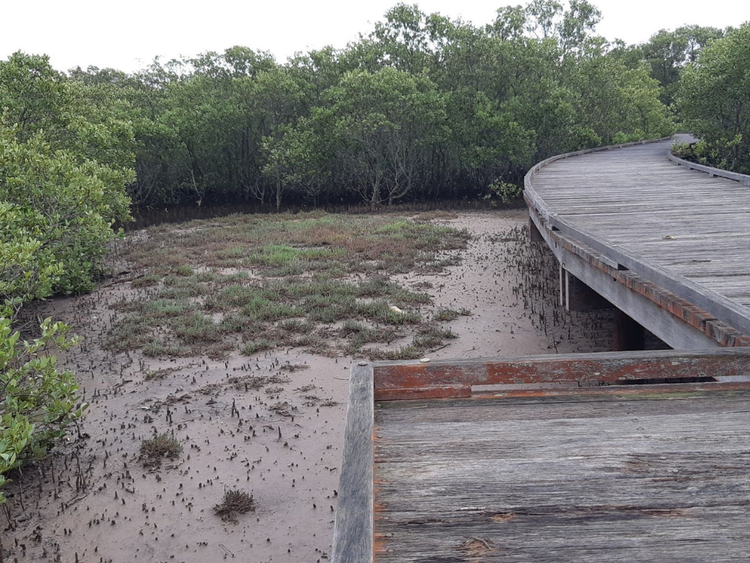
Students investigate the unique intertidal wetland environment found on Ash Island, part of Kooragang Island, which is included in the Hunter Estuary and a RAMSAR listed site. Students investigate their importance, how they are valued, the systems, threats and management.
Activities:
-
Primary data collection and analysis of the atmospheric, hydrological, geomorphic and ecological systems using fieldwork instruments at three locations in the wetland. Students discuss the processes shaping the wetland and connections between systems.
-
Students use quadrats to observe and record vegetation. Students investigate how topography creates vegetation zones on the island.
-
Analysis of the values of this intertidal wetland ecosystem and how these have changed over time.
-
Examination of issues, threats and management to this intertidal wetland ecosystem.
Equipment used during the program includes: hygrometer, anemometer, compass, water thermometer, water and soil pH testing equipment, turbidity tube, kestrel, clinometer, data logger and maps.
There are no food facilities on Ash Island. Students will need to bring their food and drink for the entire day.
We suggest a quick toilet stop at McDonald’s Hexham, prior to meeting our teacher on the island. A drop toilet is available at the end of the day only.
The basic program will be changed to suit the group size and weather conditions.
For further information on curriculum links, the program and excursion information see below or contact us.
Ash Island, Pacific Hwy, Hexham, Newcastle.
The Kooragang Wetland Rehabilitation Project (KWRP) is located on Ash Island next to the Hunter River and a large urban area (Newcastle) in New South Wales. It is one of the largest active coastal rehabilitation projects in Australia. The wetlands feature expanses of mangrove and saltmarsh, and in non-tidal areas, riparian woodlands, remnants of lowland floodplain rainforest and ephemeral, freshwater wetlands.
| What to bring |
Printed worksheets in colour, clipboard and pencil. Students should bring lunch, recess, refillable water bottle, hats, sunscreen, covered walking shoes plus any special requirements of the group (Wet weather gear when necessary). Non-aerosol insect repellent is advisable in summer. |
| Bus information |
The program will comence at the old Schoolhouse on Ash Island (off School House Road). Awabakal Environmental Education Centre teachers will meet you there. A map will be provided upon booking. Ash Island is accessed by turning off Maitland Road onto the bridge over the Hunter River near Hexham McDonalds. Transport will be needed throughout the day to transport the students to different points on the island. |
| Supervision |
AEEC is a NSW Department of Education school and staff are trained DoE teachers specialising in Environmental Education. AEEC teachers rely on the participation of visiting teachers to meet recommended supervision levels. Visiting teachers are ultimately responsible for behaviour of students, students with existing medical conditions or special needs. |
| Medical or special needs | Please notify Awabakal Environmental Education Centre of any medical conditions or special needs that may need to be taken into consideration when planning or delivering the program. Upon booking an excursion, a form will be emailed to complete to detail any medical or special needs. |
| Parent/ carer helpers | As our staff are Department of Education teachers we don’t require parent helpers on the day. If your school decides to bring parents, we kindly ask that you keep the number to a minimum. For safety reasons and the nature of our sites, parents will not be able to participate in activities. |
| Extreme or wet weather | Extreme weather conditions such as heavy rainfall, high winds and extreme bush fire danger may result in the excursion being modified, postponed or cancelled. If you have any concerns regarding the weather prior to the excursion, contact Awabakal Environmental Education Centre on 4955 8673 or email awabakal-e.school@det.nsw.edu.au. |
| Cancellations | Cancellations with less than three school weeks notice may incur an administration fee. This does not apply to cancellations due to weather or fire danger. |
Introduction - 10:00am
Recess - 10:20am
Learning activities - 10:30am
Lunch - 12:30pm
Learning activities - 1:00pm
Finish - 2:00pm
There are no food facilities on Ash Island. Students will need to bring their food and drink for the entire day.
This timetable is only a guide and may be adjusted.
|
Geography outcomes A student:
|
|
Content Overview of the uniqueness and diversity of the Earth
Processes, cycles and circulations connecting natural systems
The processes, cycles and circulations connecting natural systems including:
|