Materials and environmental sustainability - Redhead Beach
Science


Program
Students trace the fate of an abandoned soft drink bottle, chip packet, and fishing line, uncovering what happens when these common polymers are no longer seen as valuable resources.
Activities:
-
Students sort litter through a relay competition to determine the quantity and types of polymers found in the local area. Students propose solutions to minimise the impact of litter on the environment.
-
Students conduct an investigation into the impact of human activity on the natural world through assessing the water quality of Freshwater Creek. Students undertake practical water quality testing, draw conclusions, discuss implications and propose solutions.
-
Students follow a method to collect data and assess the level of microplastic pollution on Redhead Beach. Students discuss causes and implications of microplastic pollution and propose solutions to better protect ecosystems.
-
Students walk through the dunes and beach observing and discussing the properties of resources used by Aboriginal people for a range of purposes.
The basic program will be changed to suit the group size and weather conditions.
For further information on curriculum links, the program and excursion information see below or contact us.
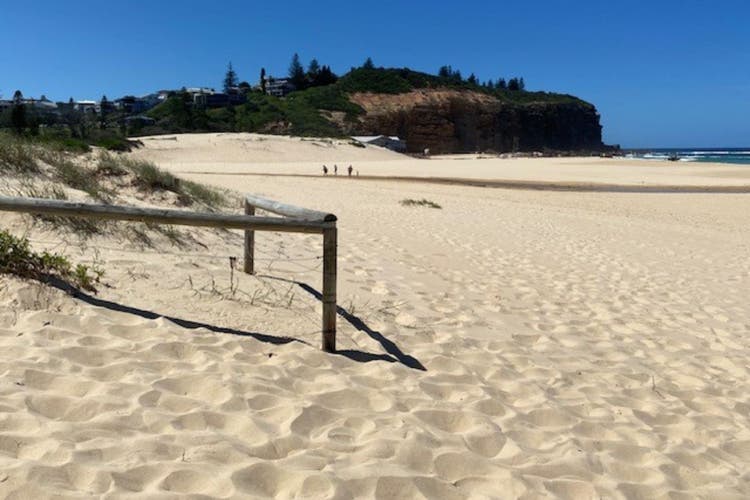
Redhead Beach
Students meet at Webb Park, Beach Road Redhead at 10:00am. The excursion takes place in Webb Park and on the beach adjacent to Webb Park. Toilet facilities are available at the park. Students are collected from Webb Park at 2:00pm.
| What to bring |
Printed worksheets in colour, clipboard and pencil. Students should bring lunch, recess, refillable water bottle, hats, sunscreen, covered walking shoes plus any special requirements of the group (Wet weather gear when necessary). Non-aerosol insect repellent is advisable in summer. |
| Bus information |
On the day come directly to Webb Park, Beach Road Redhead. Student transport drops off students at this location to commence excursion at 10:00am. Transport collects students at 2:00pm at Webb Park, Beach Road, Redhead. |
| Supervision |
AEEC is a NSW Department of Education school and staff are trained DoE teachers specialising in Environmental Education. AEEC teachers rely on the participation of visiting teachers to meet recommended supervision levels. Visiting teachers are ultimately responsible for behaviour of students, students with existing medical conditions or special needs. |
| Medical or special needs | Please notify Awabakal Environmental Education Centre of any medical conditions or special needs that may need to be taken into consideration when planning or delivering the program. Upon booking an excursion, a form will be emailed to complete to detail any medical or special needs. |
| Parent/ carer helpers | As our staff are Department of Education teachers we don’t require parent helpers on the day. If your school decides to bring parents, we kindly ask that you keep the number to a minimum. For safety reasons and the nature of our sites, parents will not be able to participate in activities. |
| Extreme or wet weather | Extreme weather conditions such as heavy rainfall, high winds and extreme bush fire danger may result in the excursion being modified, postponed or cancelled. If you have any concerns regarding the weather prior to the excursion, contact Awabakal Environmental Education Centre on 4955 8673 or email awabakal-e.school@det.nsw.edu.au. |
| Cancellations | Cancellations with less than three school weeks notice may incur an administration fee. This does not apply to cancellations due to weather or fire danger. |
Introduction - 10:00 am
Morning tea - 10:15 am
Learning activities - 10:30am
Lunch - 12:00pm
Learning activties - 12:30pm
Finish - 2:00pm
Students will have morning tea and lunch in Webb Park.
This timetable is only a guide and may be adjusted.
|
Science outcomes A student:
|
|
Content Materials
Environmental Sustainability
|